Leopard print has this reputation problem, kind of like lace does, actually. Say the words and half the room pictures a slightly tacky early-2000s tube top, the other half pictures their grandmother’s coat collection. It seems to me both of those images are exactly what’s making a comeback in 2026, just reworked into something that actually looks intentional instead of accidental. Learning how to wear leopard print without it looking dated is quickly becoming one of the most-searched styling questions of the season.
Animal print, leopard specifically, is riding the same wave as the broader 80s glamour resurgence happening across fashion right now. High shine, expert tailoring, decadence over subtlety, and somewhere in the middle of all that, the leopard print trend 2026 is having a real moment again. What I mean is, this isn’t the “one wild accent piece” leopard trend from a few years back. It’s leopard as an actual wardrobe staple, styled with the same confidence as a solid neutral, and knowing how to style leopard print the right way is what separates current from dated.
Why Leopard Print Works Right Now
Fashion’s been quiet for a while, minimalism, neutral tones, understated everything. Leopard print is basically the opposite of all that, which is exactly why it’s resonating now. It seems to me people are craving personality again after years of playing it safe, and leopard is one of the fastest ways to inject that without committing to a whole new aesthetic.
Here’s the actual trick to making it read as current instead of dated. Treat leopard like a neutral, not a statement. Pair it with quiet, structured pieces rather than piling on more prints or bold colors. That contrast, wild pattern against calm styling, is what separates 2026 leopard from the tackier versions people remember. It’s also worth noting that leopard print has resurfaced in fashion cycles for decades, which suggests it taps into something more enduring than a passing seasonal trend.
Six Ways to Style Leopard Print
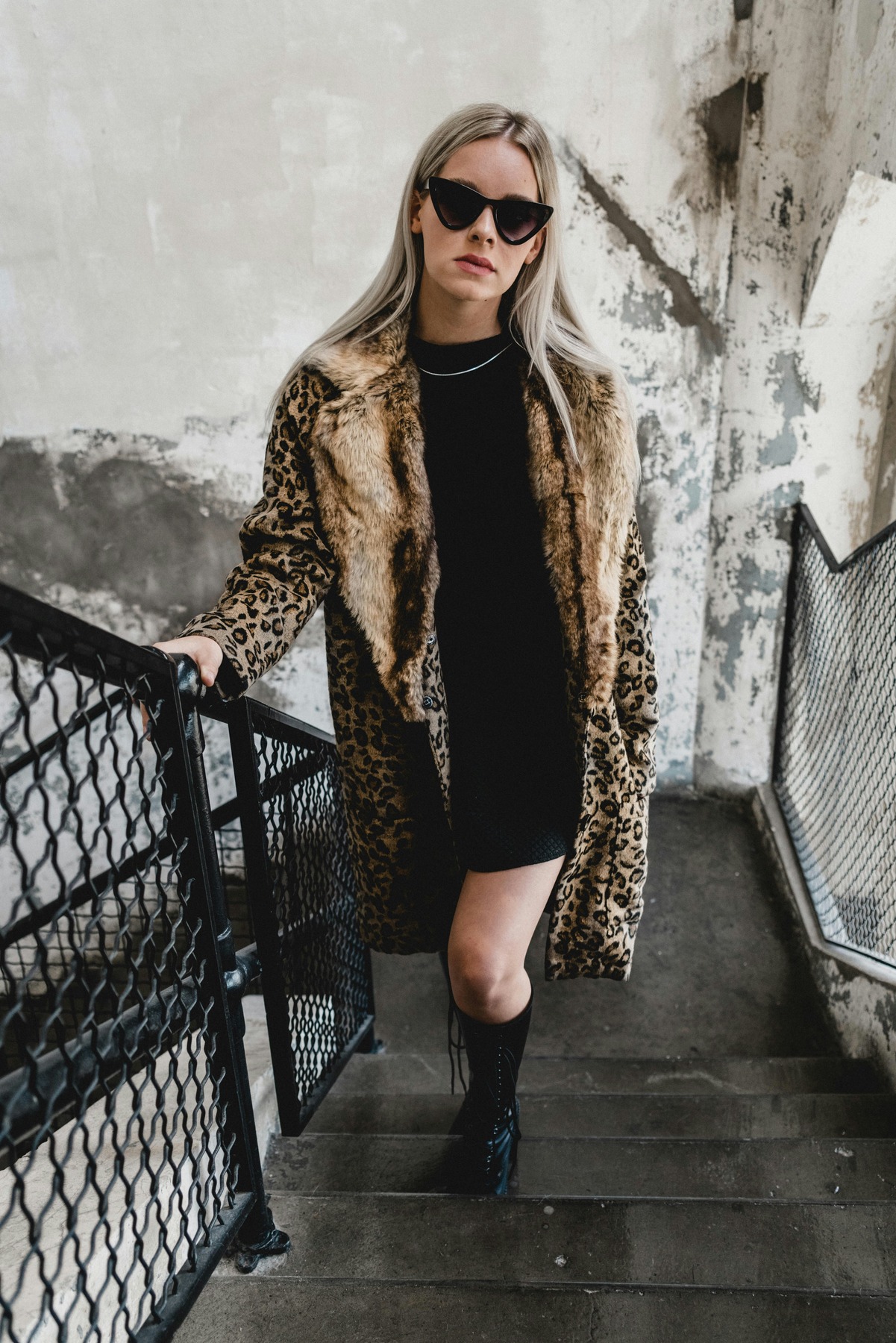
1. Leopard Coat Over Solid Black
The single easiest way into this trend. A leopard coat or jacket thrown over an all-black outfit underneath. The black grounds the print completely, and the coat does all the visual work. Since outerwear is removable, it also means the print never has to commit to the whole outfit, taking the coat off reveals a completely neutral base underneath.
- Occasion fit: everyday outerwear, dinners, errands
- Effort level: low, this is basically a one-piece decision
- Styling rating: 9/10, close to foolproof
2. Leopard Accessory Only
Skip the garment entirely. A leopard bag, a pair of leopard flats, a scarf. Low commitment, still reads as on-trend. This is the version worth trying first for anyone unsure whether they’ll actually like wearing the print regularly.
- Occasion fit: literally anywhere
- Effort level: minimal
- Styling rating: 10/10, the safest entry point by far
3. Leopard Midi Skirt, Plain Tee
A leopard skirt paired with the most basic top available. The simplicity up top lets the print actually shine instead of competing with anything. This formula also transitions easily from daytime to evening, just by swapping flats for heels and adding a bolder lip.
- Occasion fit: brunch, daytime events, casual outings
- Effort level: low
- Styling rating: 9/10, one of the most reliable formulas here
4. Leopard Under a Blazer
A leopard blouse or top, mostly covered by a solid, structured blazer, with just a hint of print showing at the collar or cuffs. This is the most office-appropriate version of the trend, since the blazer keeps the overall look professional while the peek of leopard adds personality.
- Occasion fit: work, meetings, anywhere that calls for a bit more polish
- Effort level: low to medium
- Styling rating: 8/10, a good option for more conservative settings
5. Leopard Trousers, Fitted Neutral Top
Bottom-heavy leopard, kept in check by a simple, fitted top. Bolder than the skirt version, still wearable for everyday settings. The trouser cut matters here, a wide-leg or straight silhouette tends to read as more polished than a skinny fit in this particular pairing.
- Occasion fit: casual dinners, weekend outings
- Effort level: medium
- Styling rating: 7/10, requires a bit more confidence than the other formulas
6. Full Leopard, One Tonal Palette
Leopard top and bottom, but kept within the same tonal color family so it doesn’t read as chaotic. This is the boldest version, and genuinely striking when done right. Sticking to warm browns and tans throughout, rather than mixing in cooler or higher-contrast leopard pieces, keeps the whole outfit cohesive despite being fully patterned.
- Occasion fit: going out, statement-making events
- Effort level: high, takes real confidence
- Styling rating: 7/10, not for everyday wear but memorable when it lands
What Keeps It From Looking Dated
The biggest difference between “dated leopard” and “current leopard” comes down to scale and placement. Smaller, more subtle print scales tend to read as more sophisticated than the large, high-contrast prints associated with the early 2000s version of this trend. Placement matters too, leopard as an accent (a bag, a shoe, a collar peeking out) reads more current than leopard covering an entire outfit head to toe.
Fabric matters as well. Leopard print on structured, higher-quality fabric, wool coats, tailored trousers, reads as intentional and elevated. Leopard on cheap, shiny polyester tends to default straight back to the exact dated look this whole approach is trying to avoid.
What I’d Genuinely Avoid
Pairing leopard with another bold print is the fastest way to tip into chaos rather than styled boldness. Leopard needs room to be the statement on its own, adding a second competing pattern almost always reads as too much rather than intentional.
Overly bright, high-contrast leopard prints (think orange-on-black rather than a muted tan-on-brown) tend to skew toward costume territory faster than more subdued colorways. If leopard feels intimidating, starting with a muted, tonal version is the safer bet before working up to anything bolder.
Building an Affordable Leopard Wardrobe
Two or three well-chosen leopard pieces go further than a closet full of them. A leopard accessory, a bag or a pair of shoes, is the easiest and cheapest starting point, since it requires zero outfit planning and works with nearly everything already owned. From there, a leopard coat or blazer is the strongest second investment, since outerwear gets worn constantly and does the most visual work per piece.
A rough budget for building this out: a leopard accessory typically runs $20 to $40, a leopard top or skirt lands somewhere between $25 and $50, and a leopard coat, the real investment on this list, tends to run $80 or more depending on fabric quality. None of this requires designer pricing to participate in the trend meaningfully.
Why This Trend Has Staying Power
Leopard print has resurfaced in fashion for decades now, which says something about its actual staying power compared to trends built purely on novelty. It taps into something a little more primal than most patterns, confidence, boldness, a refusal to blend in, which lines up closely with the broader mood shift happening across fashion in 2026.
Start with the accessory version if the whole trend feels intimidating. Work up to the coat or the skirt once it starts feeling familiar rather than daring. It seems to me leopard print rewards exactly the kind of confidence it demands, the more naturally it gets worn, the less “trendy” and the more “just how you dress” it starts to feel.